Maxiture
An exploration of maximalism through texture, material, and contrast.
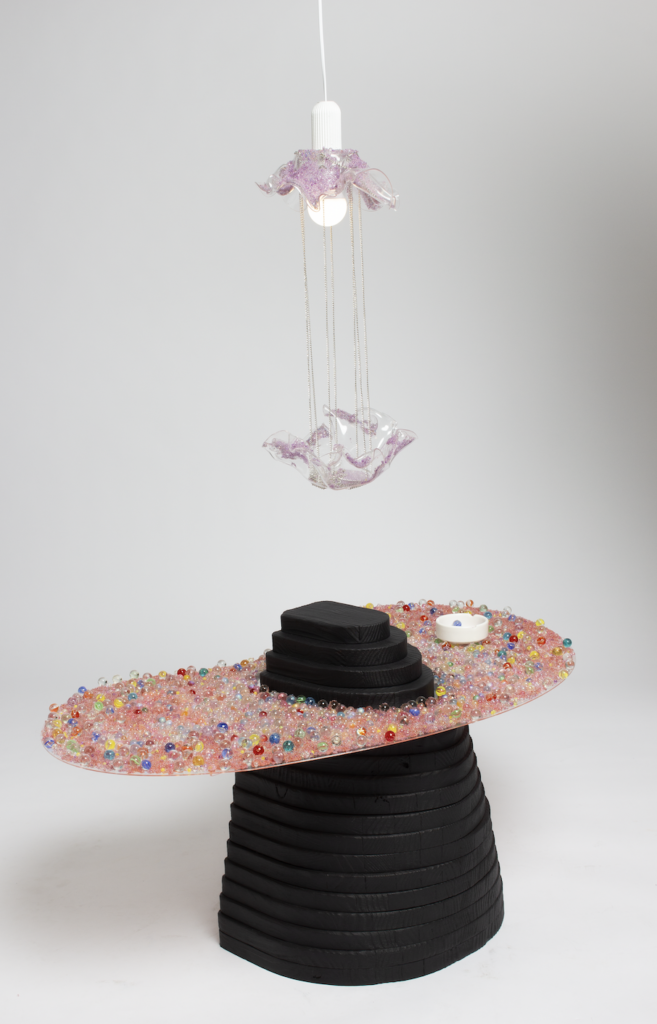
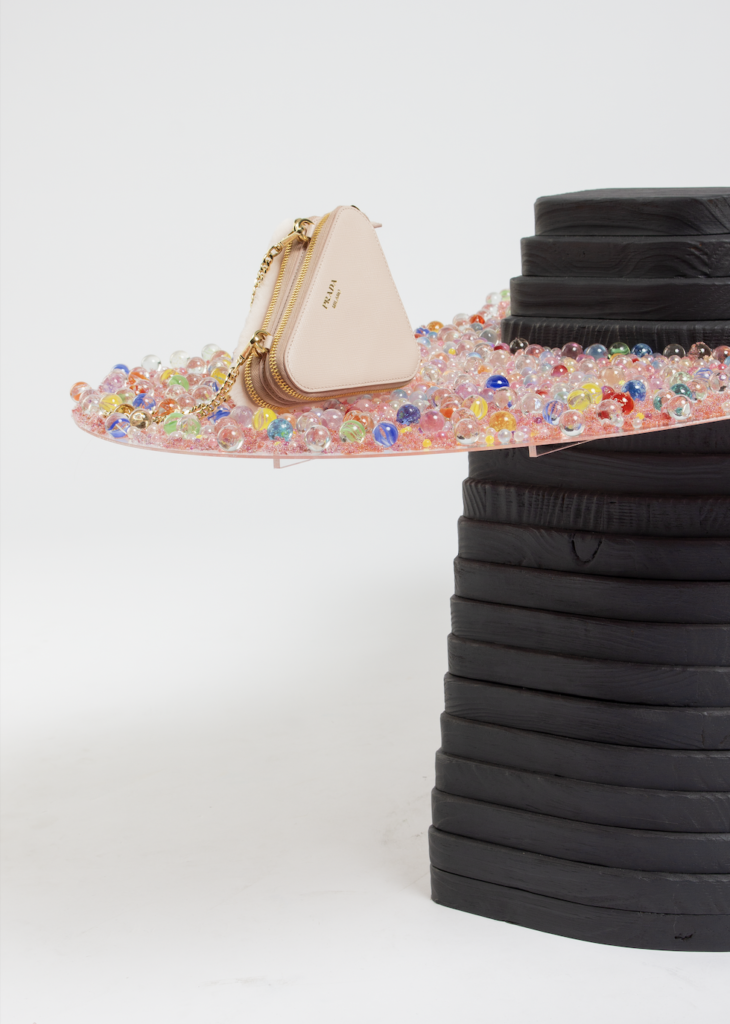
Maxiture
Maxiture explores how unconventional materials and intricate finishes can transform everyday furniture into something expressive, tactile, and visually unexpected. Inspired by my fascination with texture and vibrant aesthetics, the project embraces the idea of more — more material, more detail, more contrast — bringing maximalism into furniture through experimentation and craft.
What does maximalism feel like?
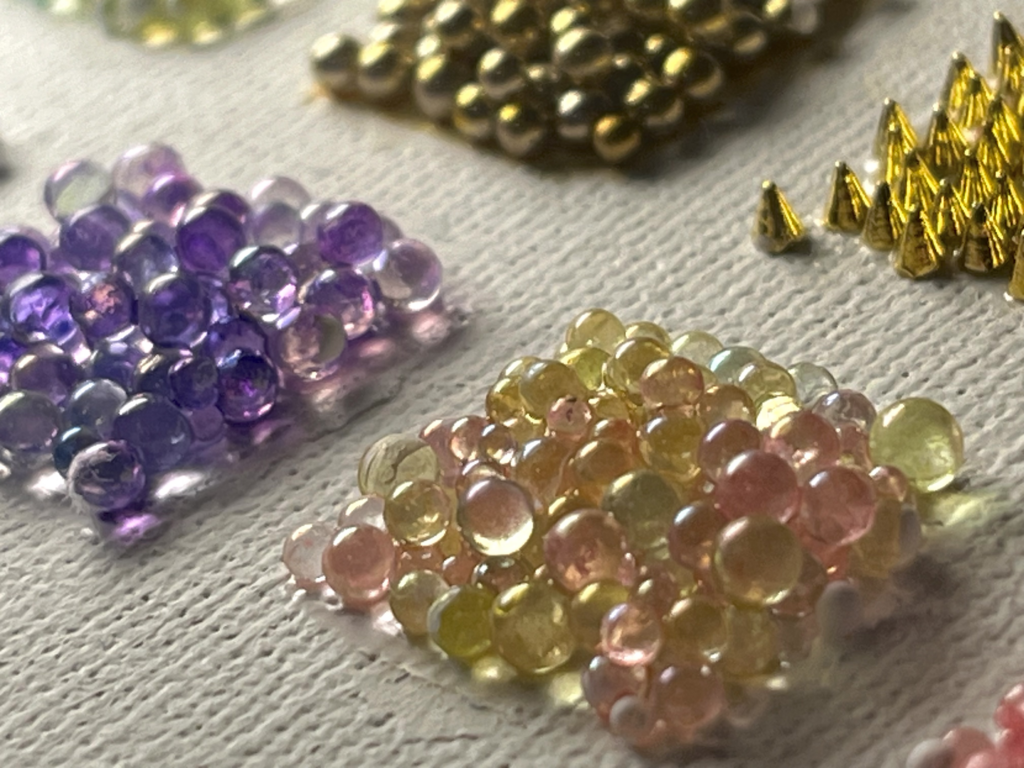
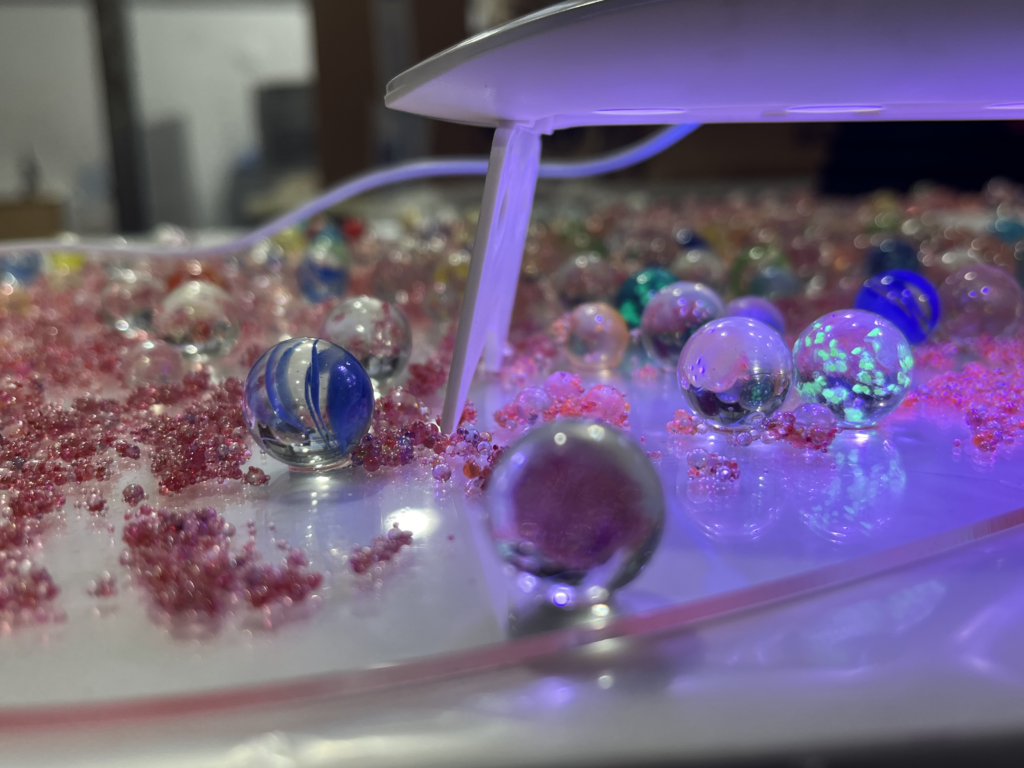
Rather than approaching maximalism simply as an aesthetic, I wanted to explore it through material. What happens when contrasting textures are pushed together? How can a surface make you want to look closer — or reach out and touch it. These questions led to a series of experiments with glass spheres, resin, UV-cured materials, wood, texture, and different methods of joining and forming.
Experimenting with texture
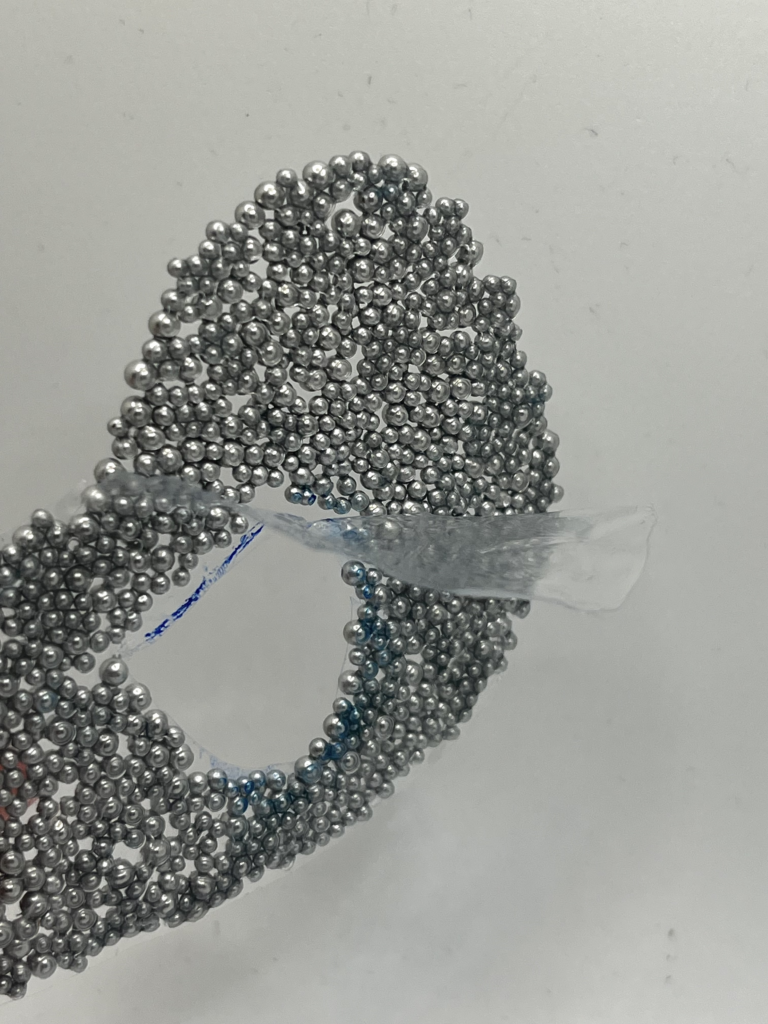
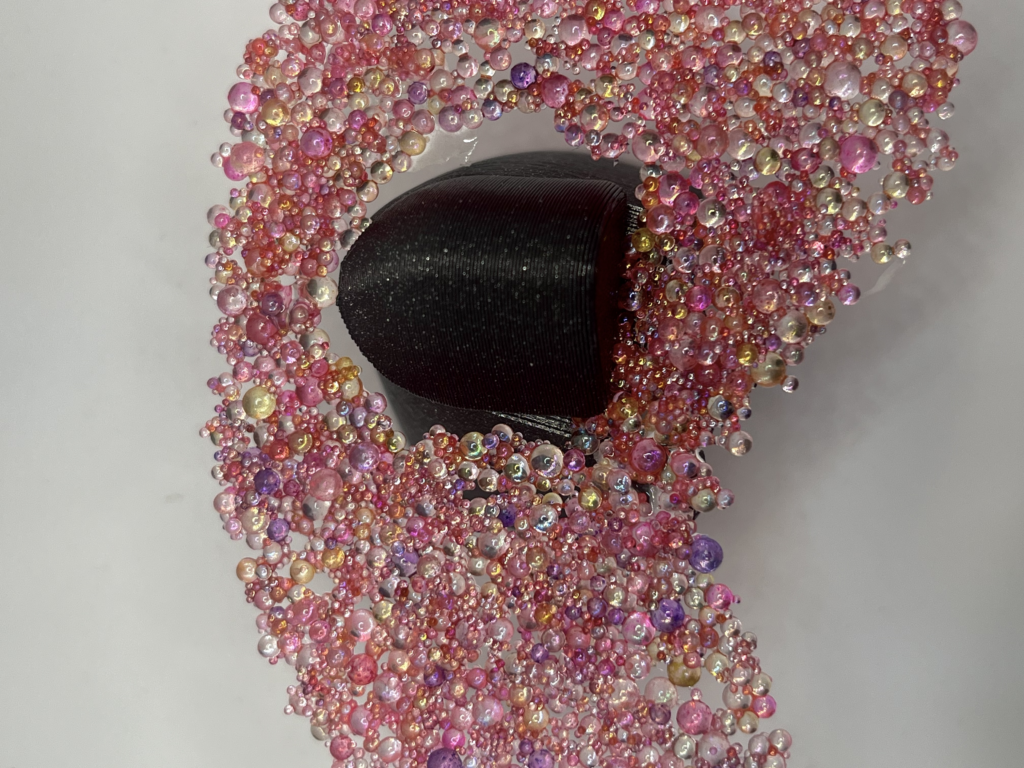
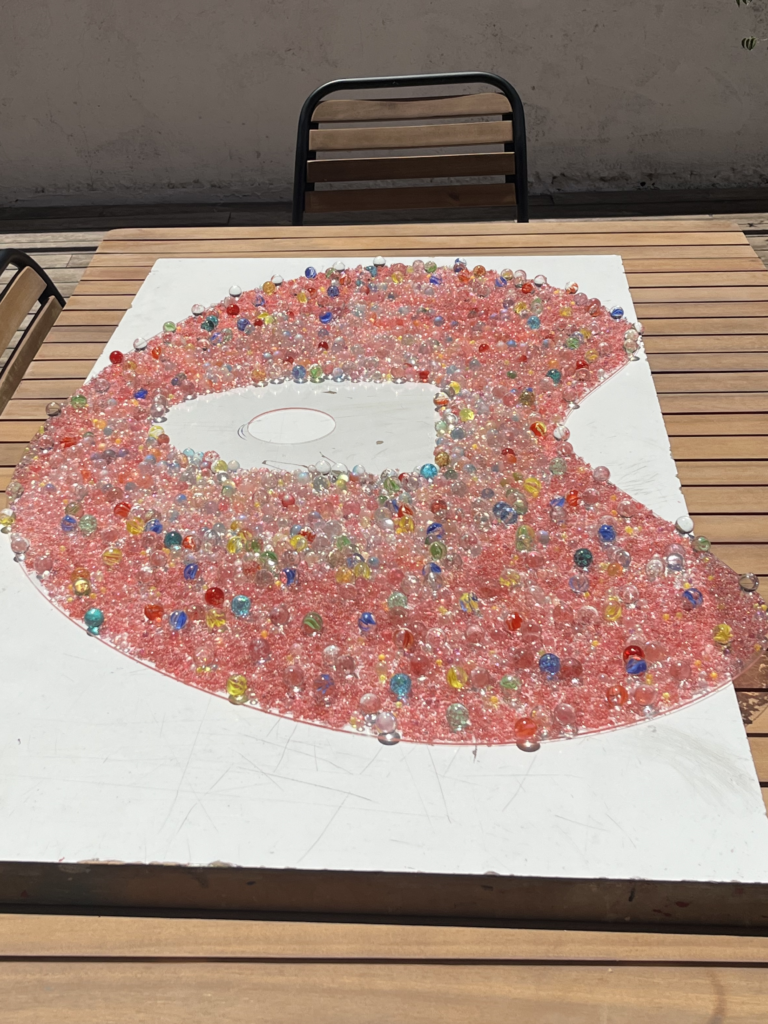
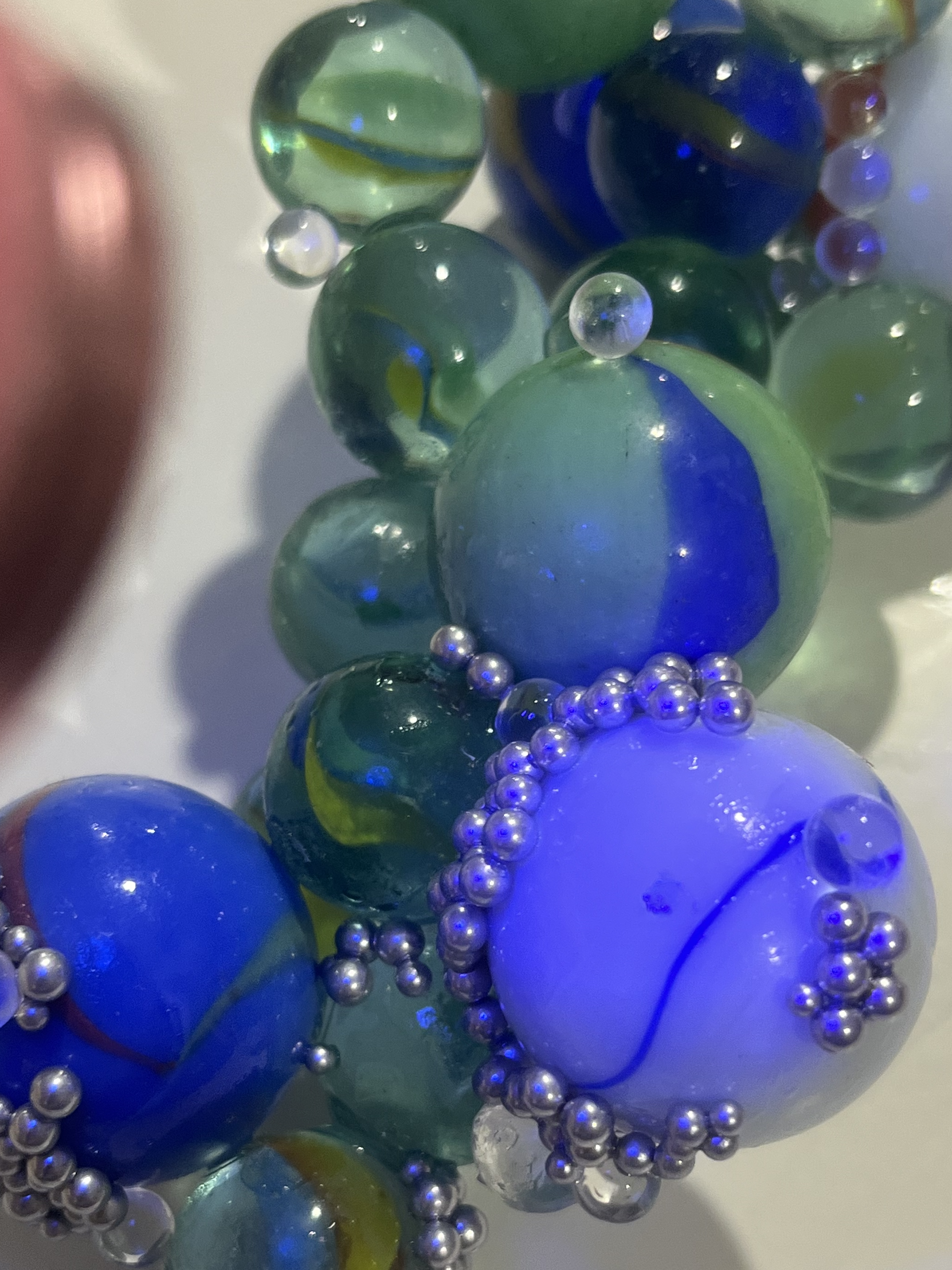
Using glass spheres in different sizes, I tested ways of creating textured surfaces and three-dimensional forms. The spheres were attached, layered, molded, and combined with resin and UV-curing techniques to understand how a highly detailed material could behave structurally as well as visually.
From material to object
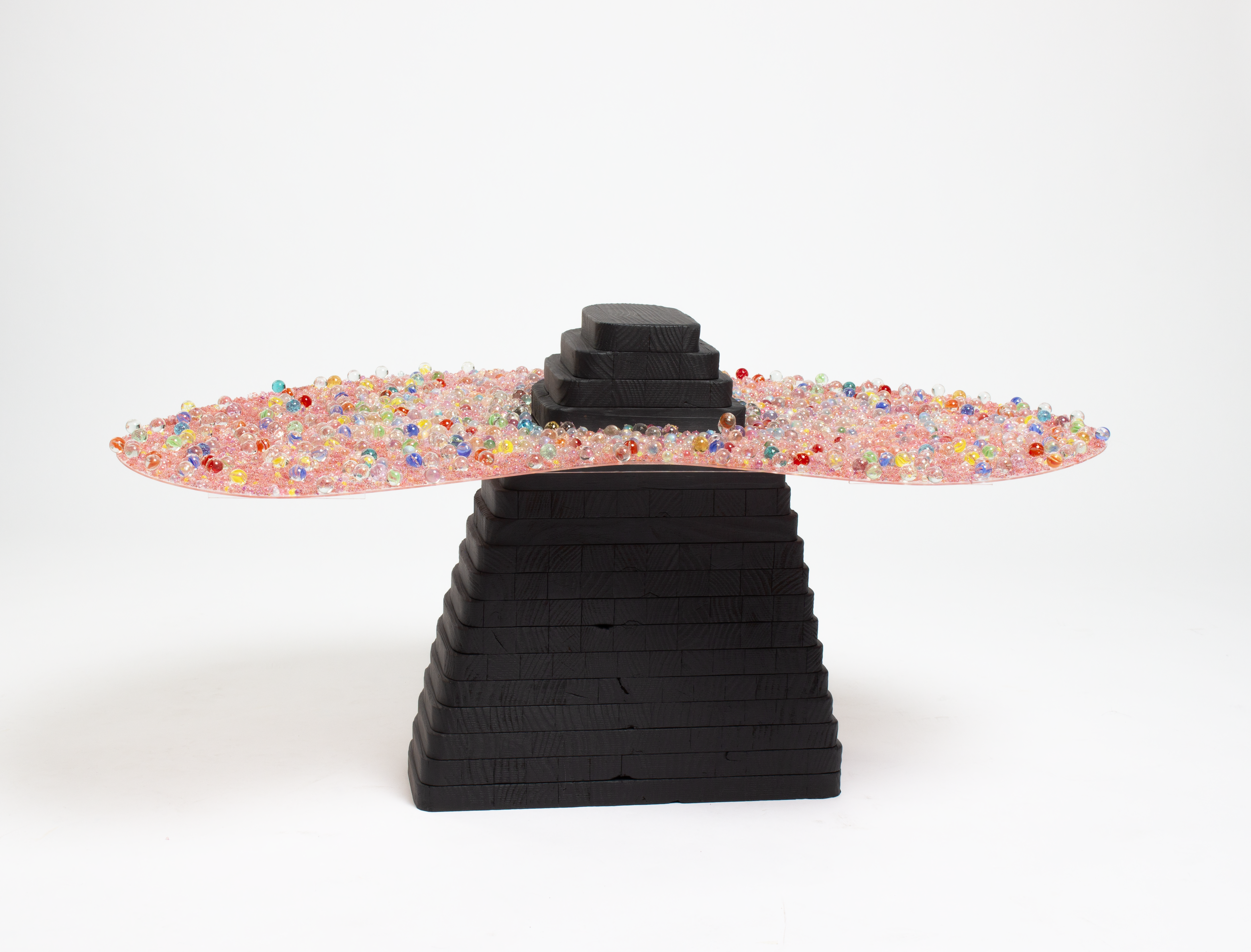
The experiments developed into a family of three concepts: the Maxi Table, Maxi Coat Stand, and Maxi Lamp. Each object explored a different quality of the spherical material. The coat stand imagined movable spheres attached through magnetic mounts, while the lamp explored how light could diffuse through the layered sphere construction. The Maxi Table became the focus forthe final physical prototype.
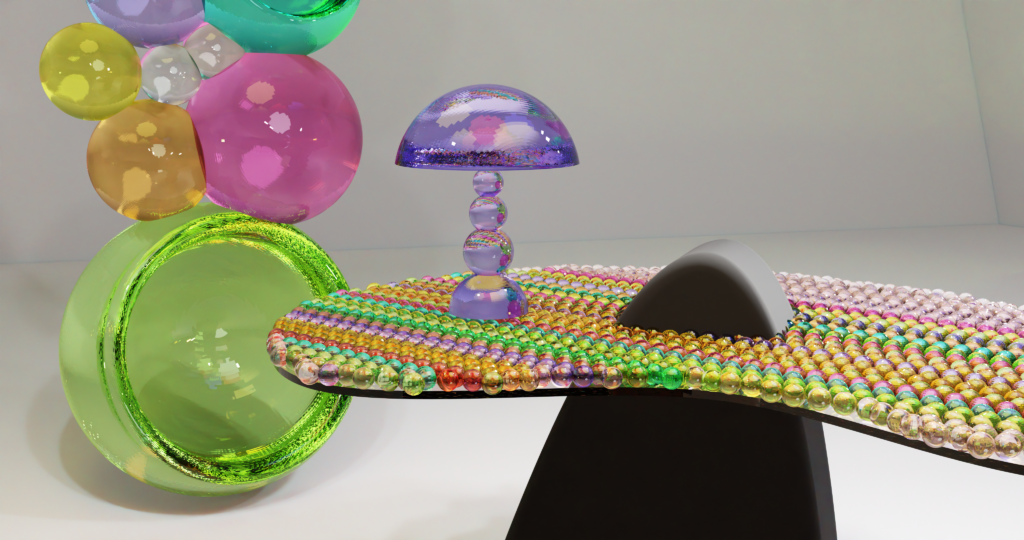
Maxi Table
Dark and vibrant. Controlled, but excessive.
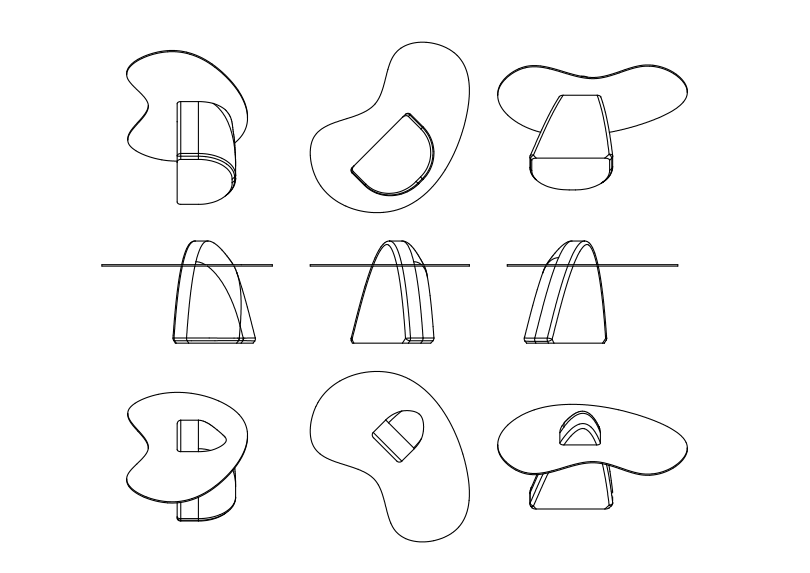
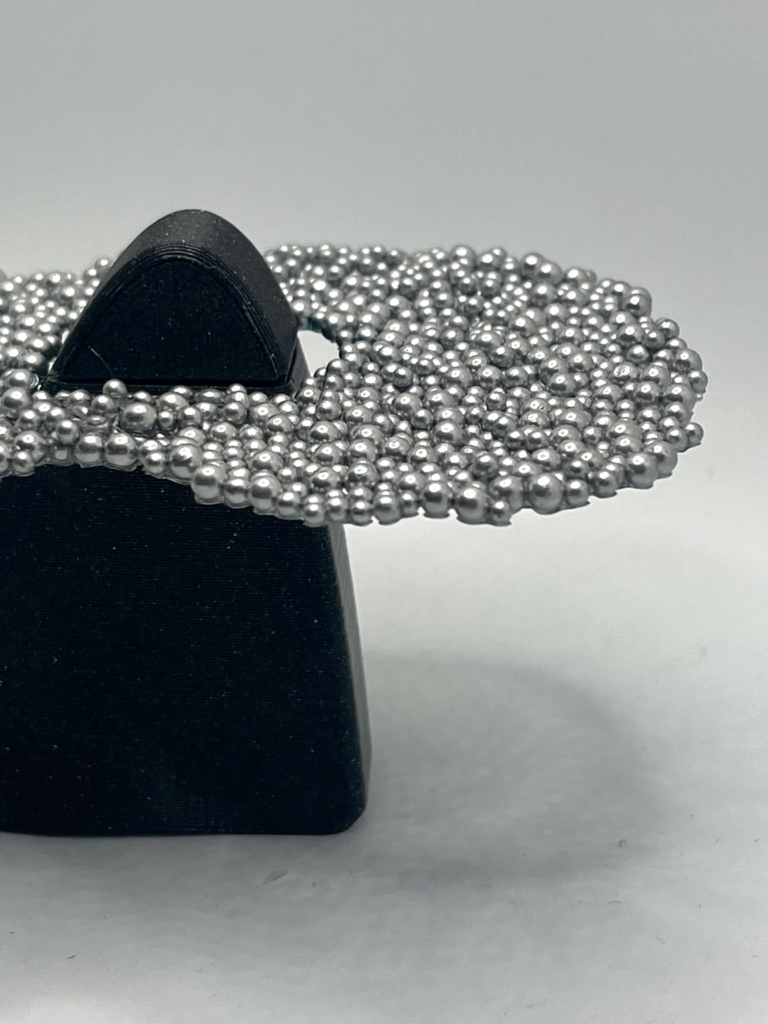
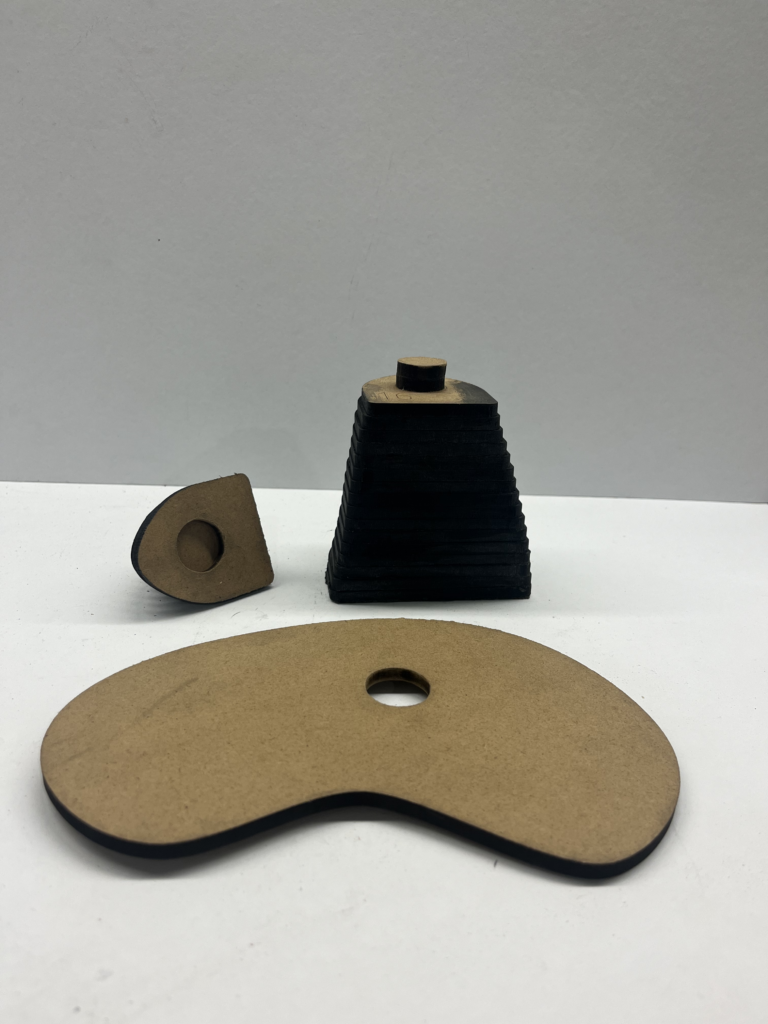
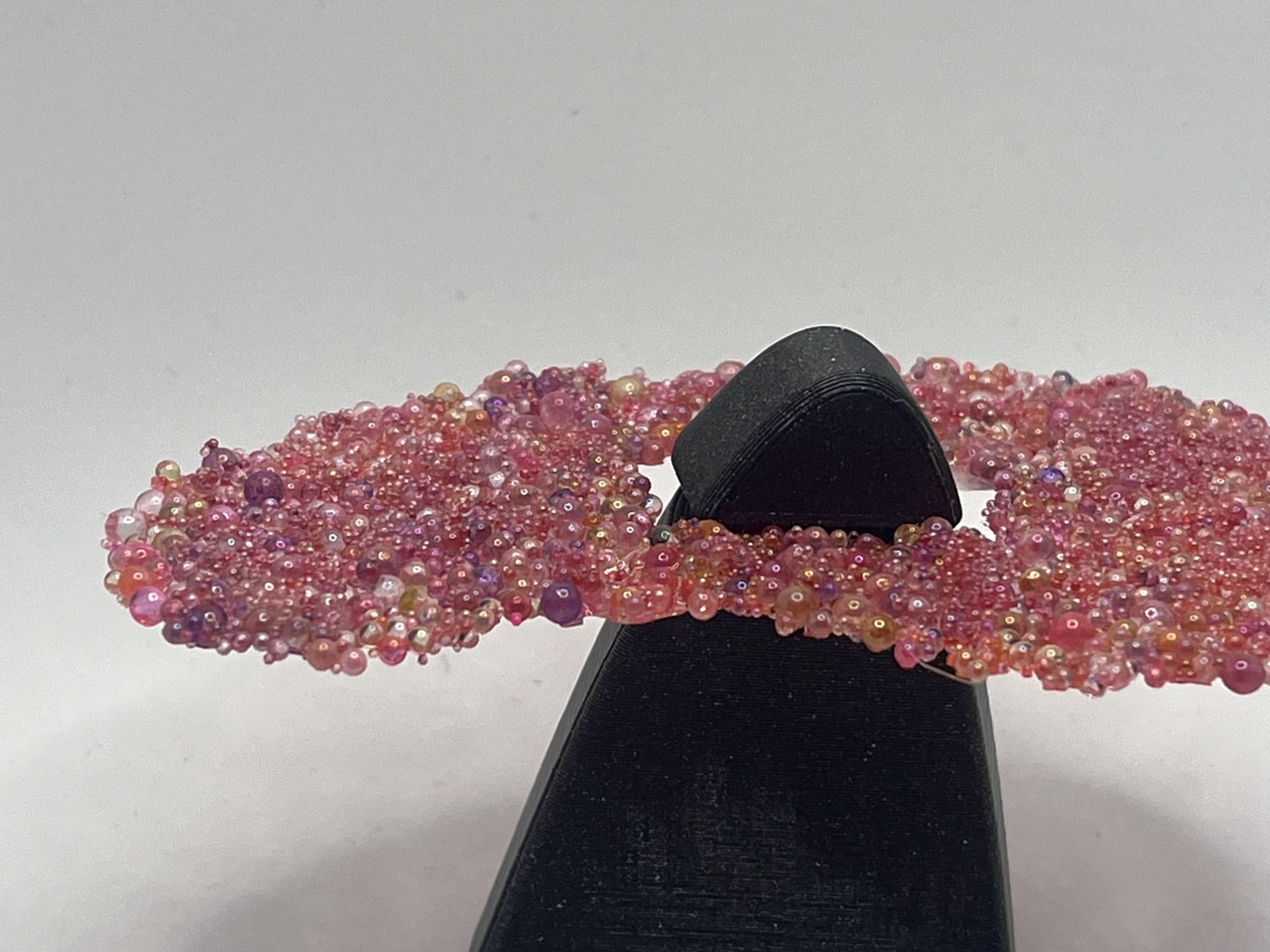
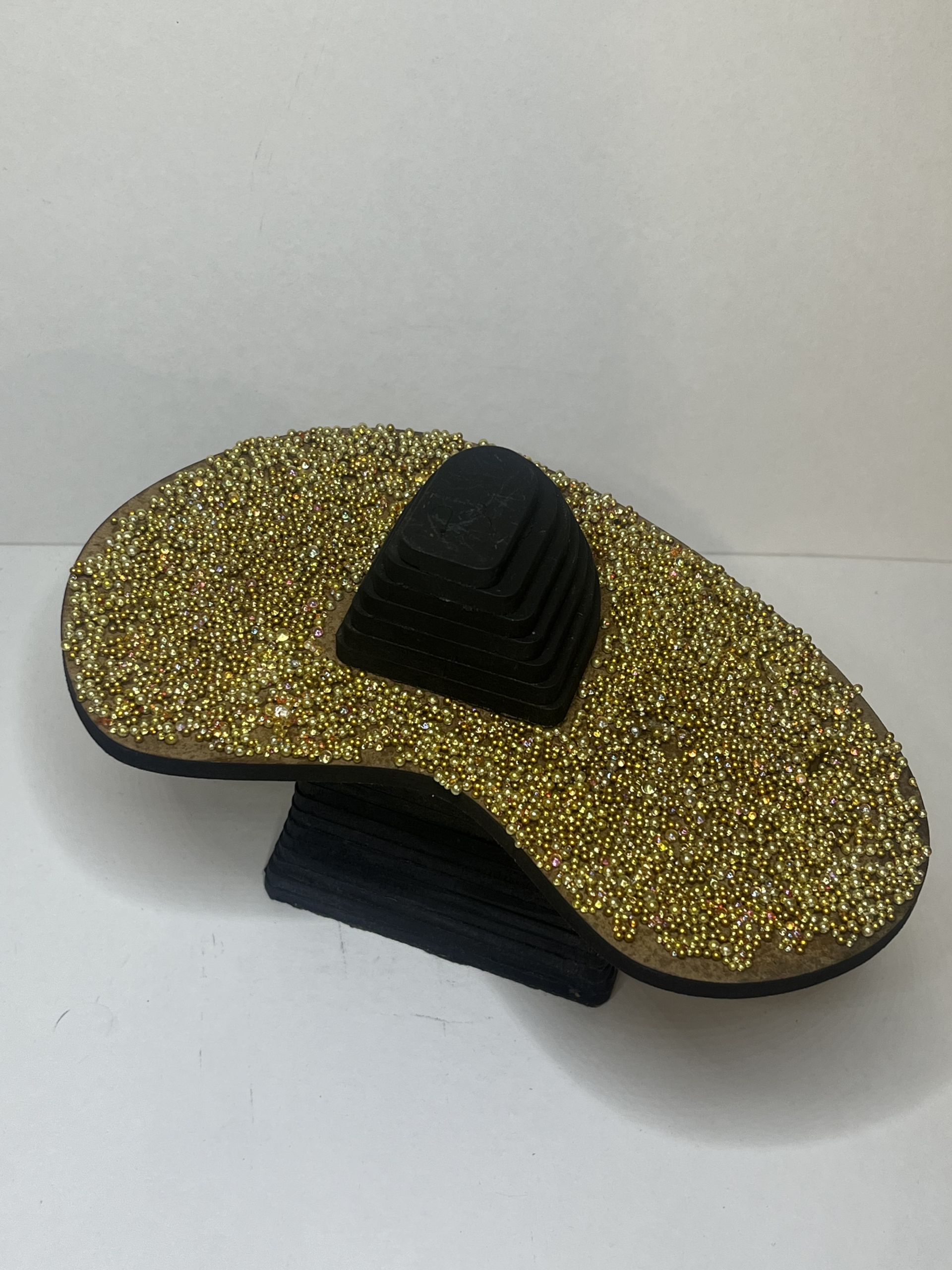
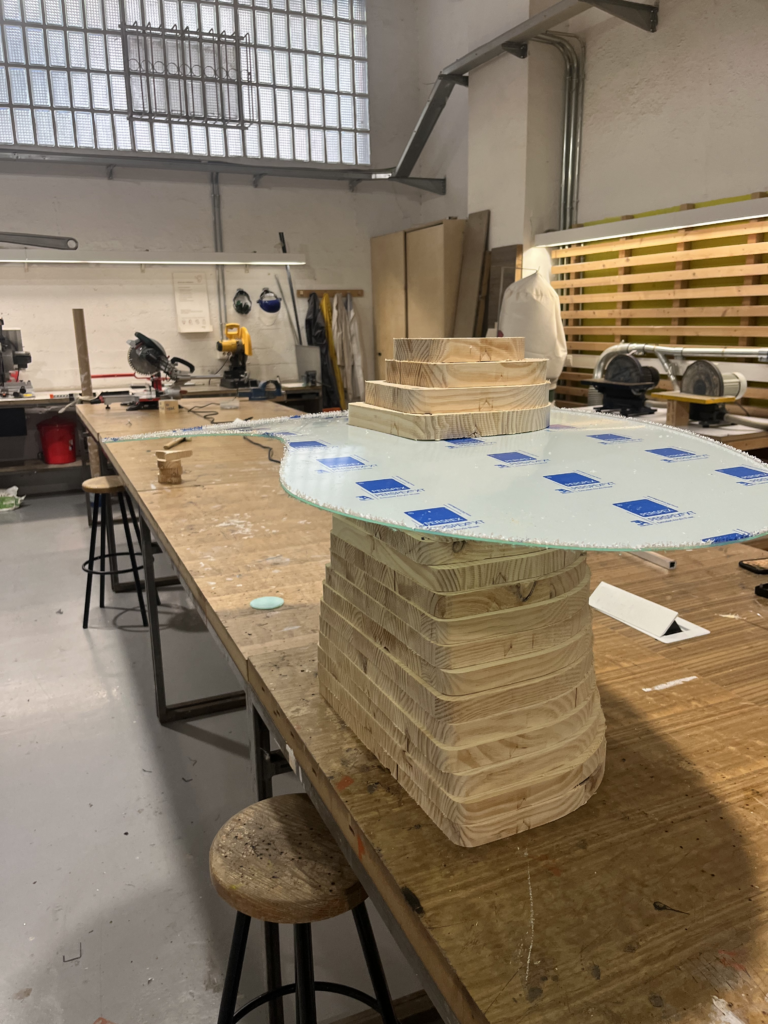
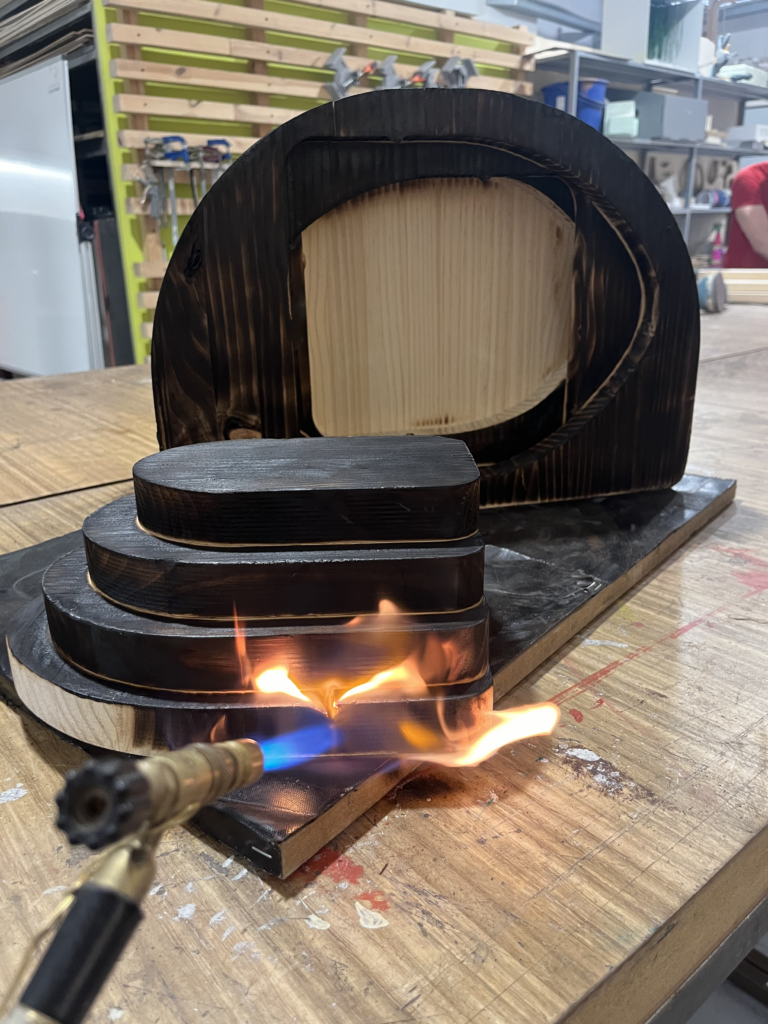
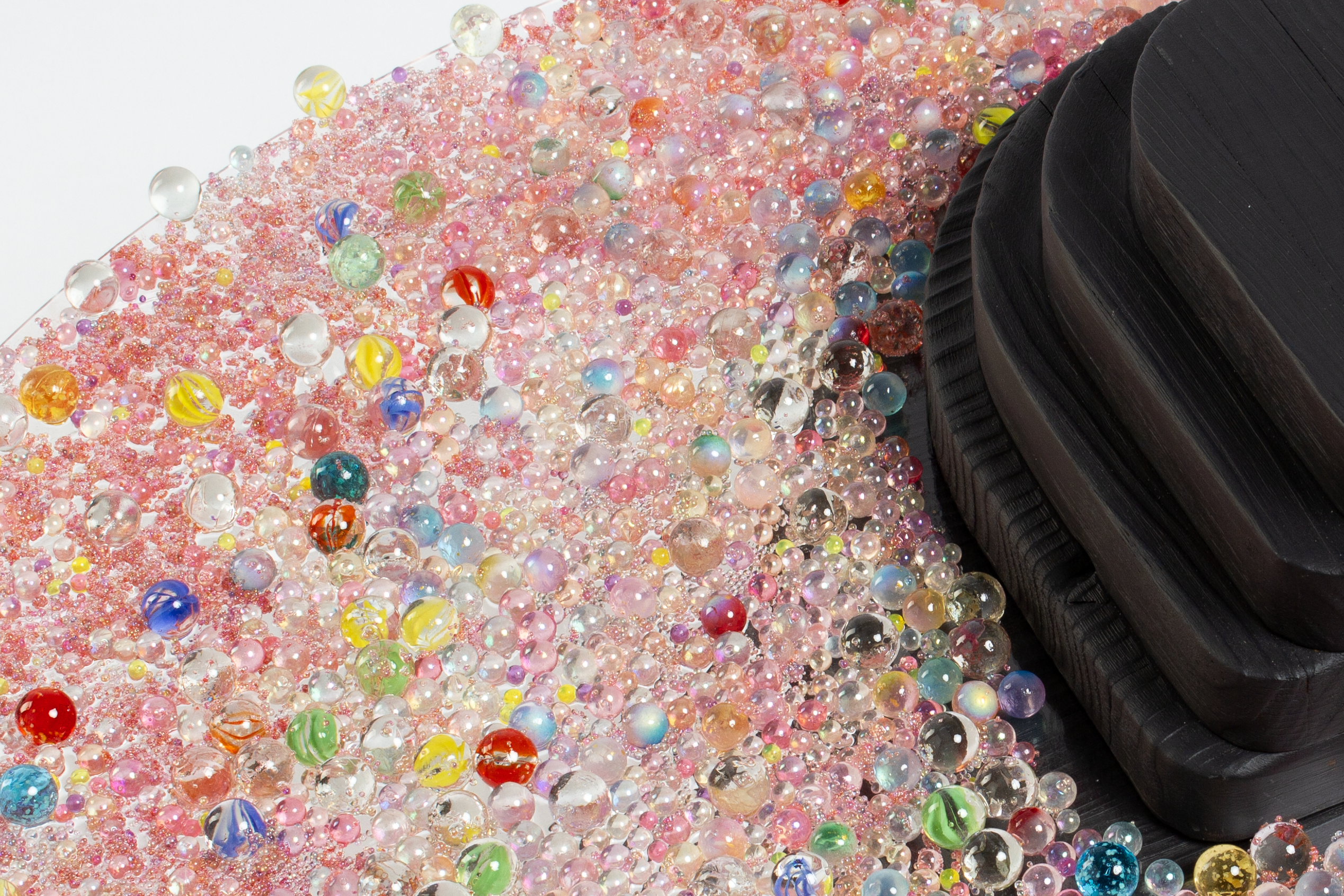
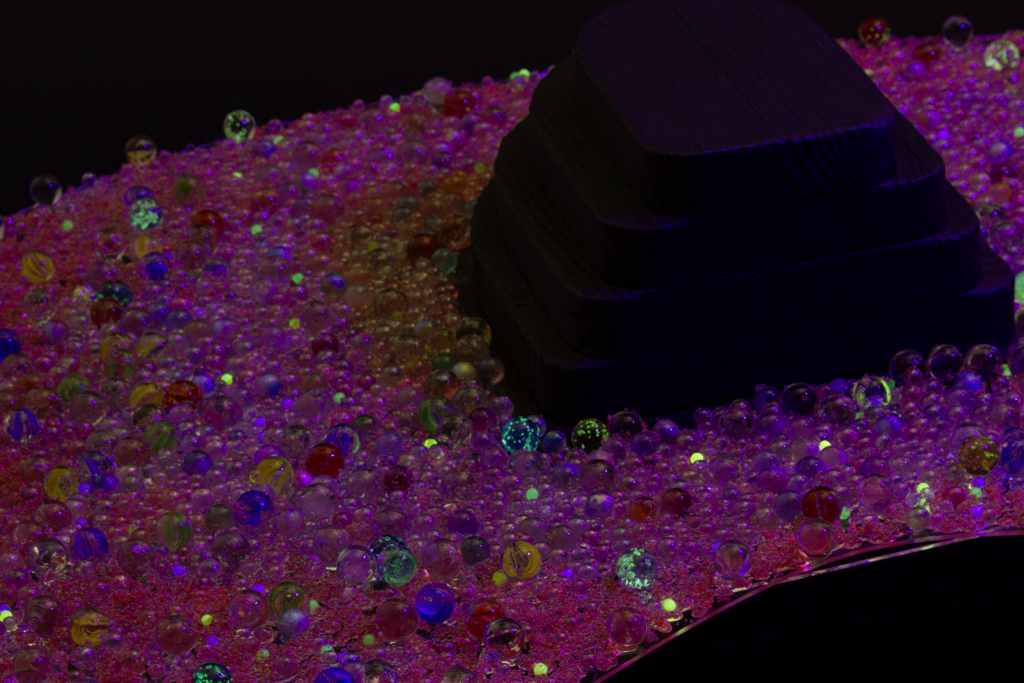
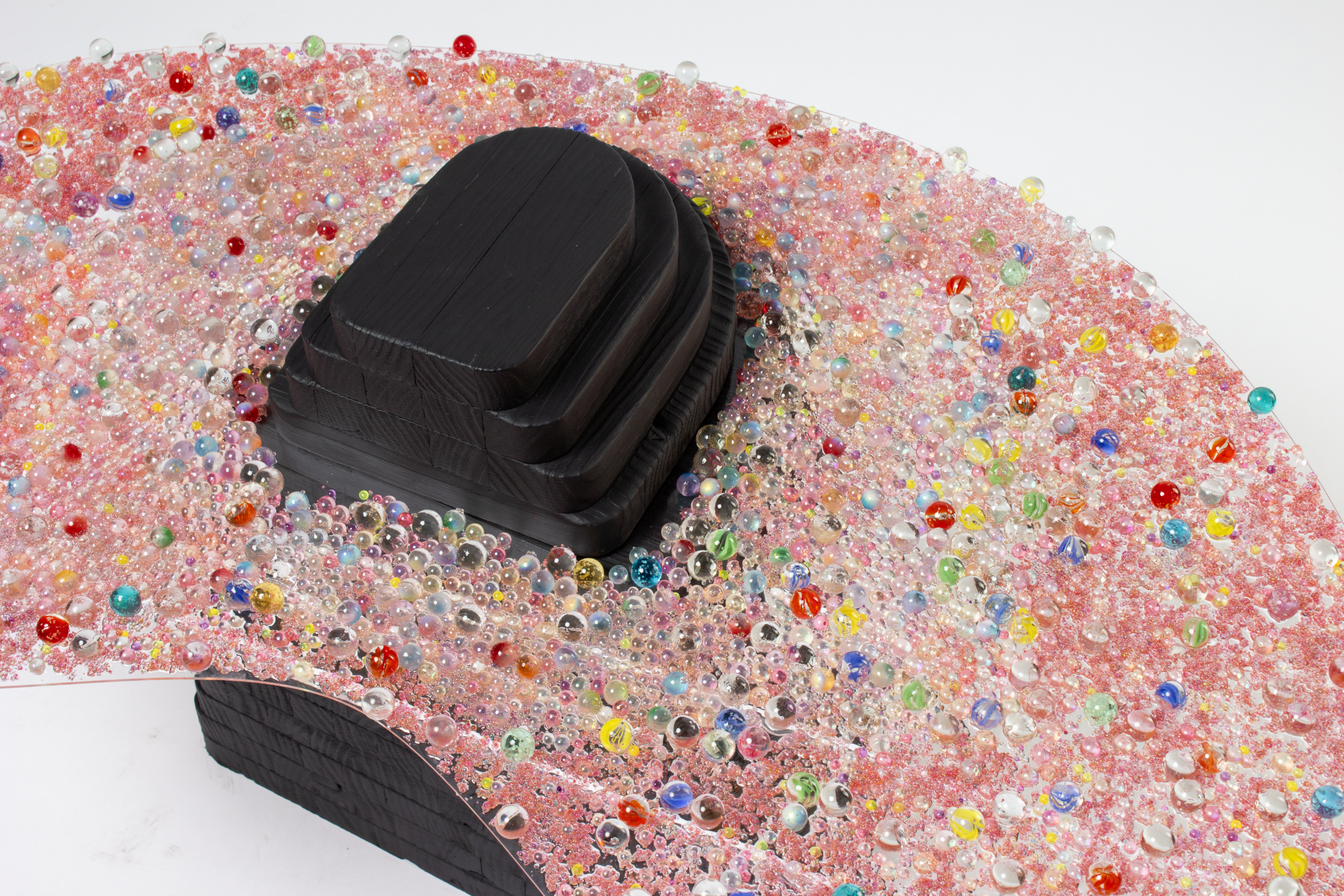
The Maxi Table brings together two dramatically different material languages. The base is made from wood treated using Yakisugi, a traditional Japanese wood-charring technique that creates a deep, dark and highly textured surface. Above it sits a contrasting tabletop made from glass spheres suspended in UV resin, creating a dense, colorful surface filled with hundreds of small details. The restrained geometry of the table allows the materials themselves to become the focus.
Making Maxiture
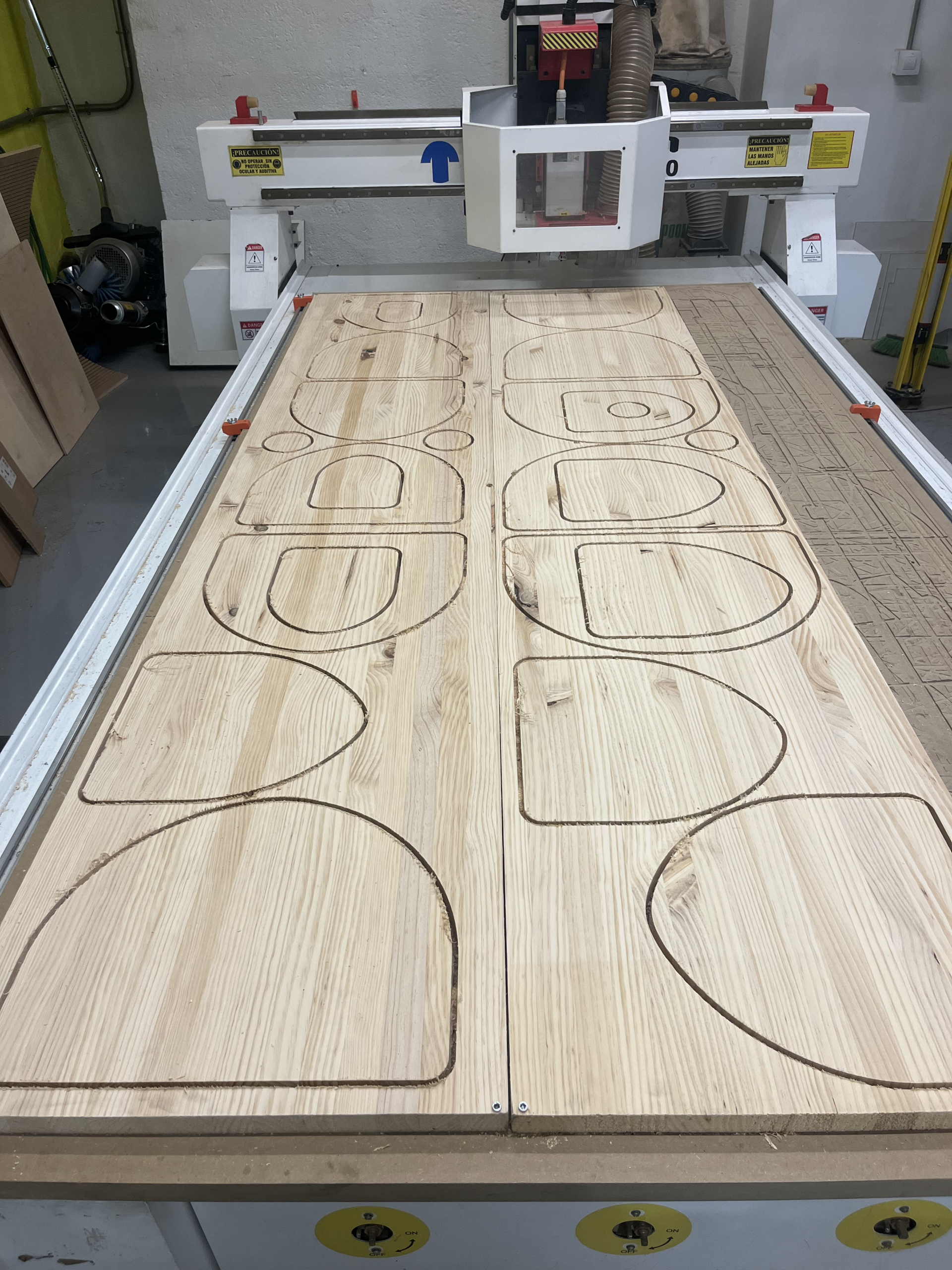
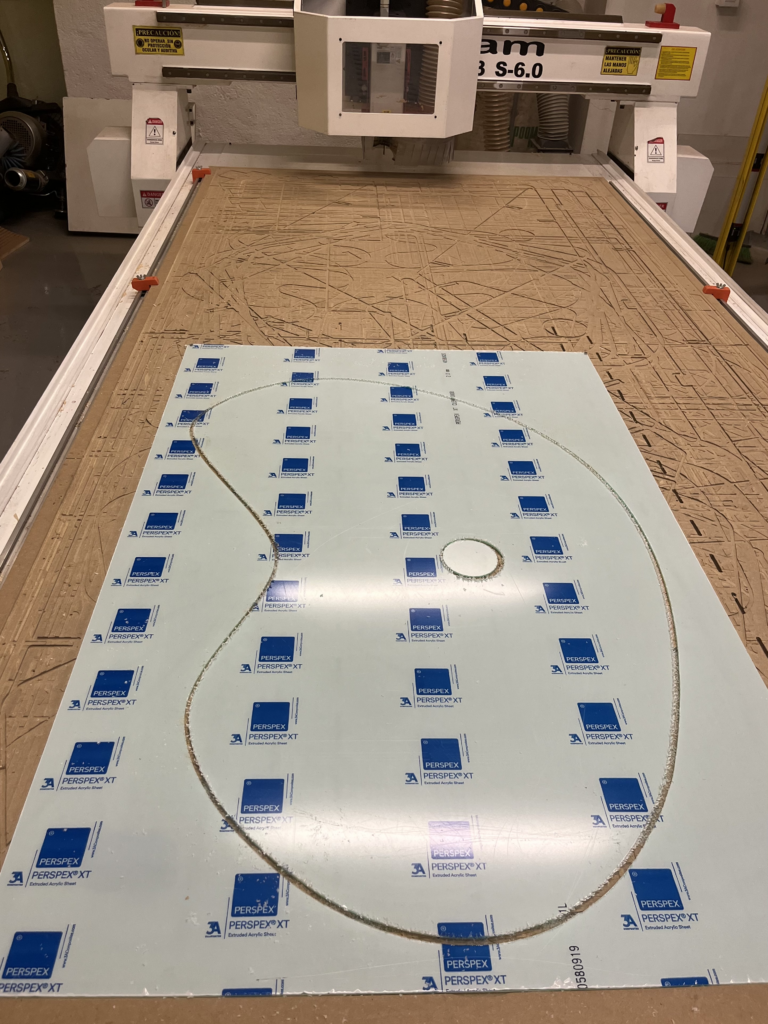
Developing the final table meant translating small material experiments into a functional piece of furniture. I tested different sphere sizes, molds, adhesives, resin techniques, surface compositions and methods of construction before developing the final tabletop. In parallel, I experimented with charring the wooden base to control its texture and finish. The process became a balance between experimentation and precision — allowing the materials to remain visually expressive while refining them into a finished object.
Maxiture celebrates the beauty of contrast, complexity, and excess. Instead of reducing an object to its simplest form, the project asks what can happen when texture and material are allowed to take over.
Sometimes, more is more.
.